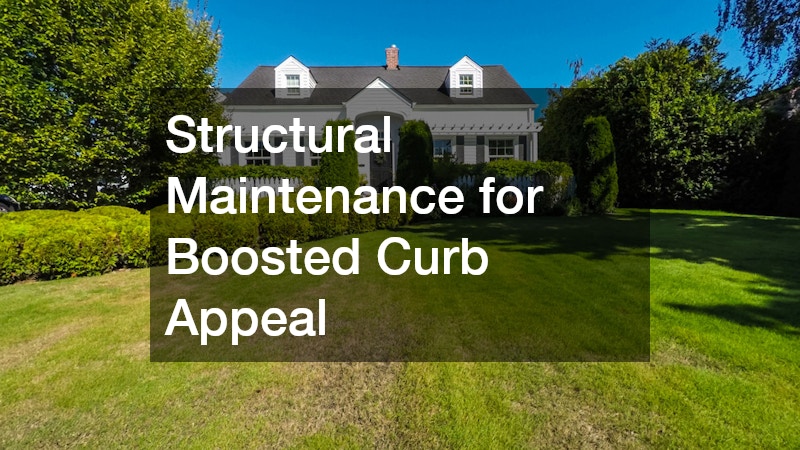

When home buyers, appraisers, or neighbors view a property, their initial judgment forms immediately. Homeowners often try to capture positive attention with fresh door paint, seasonal flowers, or dark mulch. These changes might brighten an entry, but they only cover the property’s true condition. Cosmetic curb appeal without structural integrity is short-lived. A painted porch on a settling foundation or sagging floor joist doesn’t inspire confidence, just as flower beds wane when near cracked walkways and retaining walls.
True curb appeal is based on structural resilience. The exterior framework of a house—like the roofline, hardscaping, boundary structures, drainage systems, and outdoor electrical networks—shows how well the property has been maintained. Neglecting these elements can lead to large failures. Rainwater from clogged gutters rots fascia boards, seeps into the foundation, and cracks walls. Similarly, unsealed driveway cracks let moisture in, widening under freeze-thaw cycles into potholes and uneven slabs.
Investing in structural maintenance offers a higher return than cosmetic upgrades. Addressing vulnerabilities preserves home equity and protects the building against degradation. A structurally sound exterior conveys stability and permanence, beyond what paint can offer. By focusing on critical components that shield and support your property, you establish an aesthetic built to endure the elements and time.
Protect Roof Lines and Master Water Diversion
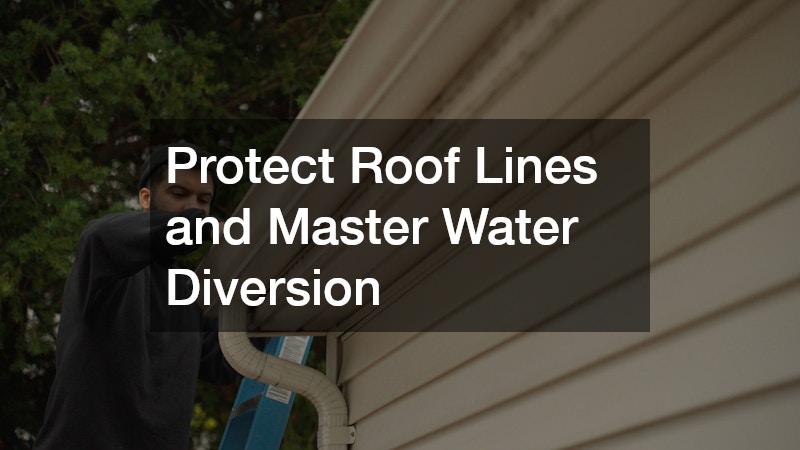
The roofline forms the visual anchor of a home’s elevation while serving as the primary barrier against atmospheric moisture. A sagging ridge line, missing shingles, or distorted fascia boards instantly signal structural neglect to observers, diminishing the home’s aesthetic appeal while inviting water intrusion. Water is the most destructive force an exterior faces. When a roof system fails to capture and direct precipitation efficiently, water flows down the siding, satulates door frames, and pool around the foundation footings, compromising the building’s structural integrity.
Maintaining a roof requires routine overhead inspections, particularly after severe weather events. Homeowners should regularly examine the condition of architectural shingles, looking for curled edges, loss of protective mineral granules, or lifting caused by wind shear. Flashing around chimneys, skylights, and vent stacks must remain tightly sealed; compromised flashing is one of the leading causes of hidden roof deck rot. For complex multi-pitch roofs or steep structures where safety and precise diagnosis are essential, hiring a reputable roofing company ensures that subtle structural sagging, underlayment decay, and subtle leaks are identified and remedied before they cause costly internal damage.
Water management depends heavily on gutter systems. Sectional gutters with multiple joints often fail over time, leaking concentrated streams of water directly along the drip line. Upgrading to seamless gutter installations eliminates weak points along the drainage line, ensuring that heavy rainfall is channeled cleanly toward downspouts. When combined with proper downspout extensions that discharge water at least five feet away from the foundation, these installations protect soil stability and prevent water stains on lower siding.
- Perform bi-annual roof deck inspections: Check for sagging timber rafters, granule loss in gutters, and loose step flashing around roof intersections.
- Clear soffit and ridge vents: Ensure continuous airflow through the attic space to prevent heat buildup, ice dams, and structural plywood warping.
- Verify downspout discharge zones: Direct downspout extensions onto splash blocks or underground drainage pipes to keep moisture away from foundation walls.
- Maintain drip edge extensions: Confirm that metal drip edges overhang the gutter trough by at least half an inch to keep water from wicking backward into fascia boards.
Restore Driveway Edges and Fill Surface Cracks
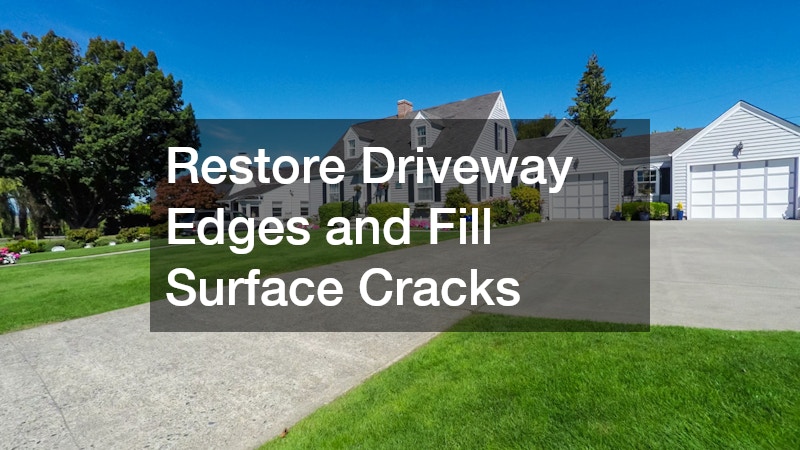
The driveway often occupies a large percentage of a home’s front profile. A fractured, pitted, or sunken driveway immediately detracts from the surrounding architecture, signaling deferred maintenance to anyone approaching the property. Beyond aesthetics, driveway degradation is a progressive structural issue. What begins as a hairline surface crack allows rainwater to seep into the supporting gravel sub-base. In colder climates, this trapped water expands as it freezes, pushing the pavement upward and shattering the surface matrix. In warmer climates, standing water softens the sub-base, leading to deep rutting, edge crumbling, and complete structural collapse under vehicle loads.
Preserving a driveway requires an understanding of the materials involved. Asphalt driveways require periodic sealing to lock in essential oils and prevent oxidation caused by ultraviolet rays and automotive fluids. When surface cracks reach a quarter-inch in width, immediate action is needed to fill them with hot-pour rubberized asphalt sealants. Ignoring these fissures allows moisture to destroy the bond between the aggregate and binder. For asphalt driveways showing widespread spiderweb cracking or deep depressions, working with seasoned asphalt contractors provides options like structural mill-and-overlay or deep-patch repairs that restore a smooth, jet-black appearance and structural integrity.
Concrete driveways face similar challenges from soil settlement and expansion pressures. Without functional control joints, concrete slabs crack unpredictably under stress. When entire driveway sections sink due to sub-base erosion, simple surface patching is insufficient. Consulting certified driveway paving contractors allows property owners to resolve underlying sub-base failures, install proper control joints, or replace failing concrete with durable interlocking concrete pavers designed to handle heavy vehicle weight without cracking.
- Clean automotive oil spills immediately: Use absorbent materials and degreasers to prevent petroleum products from dissolving asphalt binders.
- Seal surface cracks promptly: Apply flexible, weather-resistant crack fillers during dry weather to block moisture entry.
- Establish clean edge borders: Trim back turf and soil along driveway edges to facilitate water runoff and prevent weed roots from breaking open pavement margins.
- Schedule regular protective sealcoating: Apply high-grade coal tar or asphalt emulsion sealers every two to three years to guard against UV degradation and oxidation.
Repair Sunken Slab Pathways and Organize Yard Clutter
Walkways and front entry pathways serve as the transitional bridge between the public street and the private home. When concrete walkway slabs shift, tilt, or sink, they create noticeable visual misalignment and hazardous trip hazards for visitors. Settling walkways usually point to poor sub-grade compaction, soil erosion from misdirected downspouts, or burrowing pests beneath the concrete. Addressing these leveling issues promptly restores geometric balance to the entry landscape while reducing property liability.
Modern slab repair avoids the expense and disruption of complete concrete demolition. Slabjacking—injecting high-density polyurethane foam or cementitious slurry beneath settled concrete—lifts sunken slabs back to their original level within hours. This process fills subterranean voids, stabilizes the underlying soil, and eliminates dangerous height variations between slab joints. When walkways exhibit severe scaling, spalling, or cosmetic surface pitting, engaging professional concrete services ensures that specialized resurfacing compounds, concrete leveling, and protective sealants are applied correctly to extend the walkway’s lifespan.
Along with maintaining walkways, managing exterior clutter is vital for preserving clean lines and broad sightlines. Exposed lawnmowers, garbage bins, garden hoses, and power tools clutter visual corridors and damage turf and siding when leaned against walls. Constructing a dedicated, structurally sound outbuilding provides secure storage while enhancing the property’s overall aesthetic. Partnering with skilled shed builders allows homeowners to design custom storage structures that match the home’s architectural style, roof pitch, siding material, and color palette, transforming potential clutter into an attractive asset.
- Audit entry walkways for trip hazards: Walk paths regularly to identify offset slab joints, surface spalling, or moss growth that creates slick conditions.
- Seal expansion joints between concrete slabs: Replace decayed joint material with self-leveling polyurethane caulk to stop water from eroding the underlying base soil.
- Maintain proper grade pitch away from paths: Ensure surrounding soil beds slope away from walkways so surface water drains freely without pooling along slab edges.
- Integrate architectural outbuildings logically: Position storage sheds on stable gravel or concrete pads away from main sightlines while coordinating siding materials with the primary home.
Secure Perimeter Lines and Prune High-Risk Branches
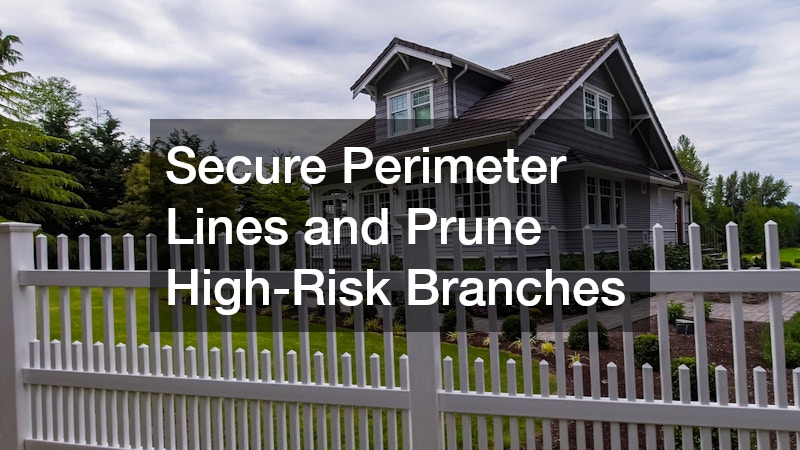
Perimeter fencing defines property lines, offers privacy, and sets a visual frame for the entire landscape. However, because fences endure continuous exposure to soil moisture, wind loads, and ground movement, they are vulnerable to structural decay. Leaning posts, sagging gates, missing pickets, and rusted hardware convey neglect and expose the property to security risks. A structurally compromised fence loses its ability to withstand severe windstorms, often collapsing and causing collateral damage to nearby structures or prized landscaping plants.
Maintaining a fence requires regular structural assessments of posts, rails, and fasteners. Wooden fence posts buried directly in soil are prone to ground-line rot, where moisture and oxygen accelerate fungal decay. Steel and aluminum fences can suffer from rust or loose anchor bolts at concrete footings. Gate posts take the most structural stress; over time, gravity causes heavy gates to drag across walkways and strain latch mechanisms. Working with established fencing services allows homeowners to reinforce sagging posts with subterranean concrete collars, replace decayed rails, and upgrade to heavy-duty, adjustable hardware that keeps gates aligned and operating smoothly.
Overhead vegetation presents another structural threat to property perimeters and main buildings. Overhanging tree limbs drop leaves that clog roof gutters, rub protective granules off shingles, and scrape paint off exterior siding. During high winds or winter ice storms, dead or structurally weak branches can break, causing extensive damage to roofs, fences, and power lines. Contracting qualified tree services ensures that mature trees are professionally pruned, deadwood is safely removed, and dense crowns are thinned to reduce wind resistance while protecting the structural integrity of your home below.
- Inspect fence post baselines annually: Probe wooden posts at the ground level with a screwdriver to detect hidden internal rot or insect damage.
- Apply protective stains or water sealers: Treat raw wood fences every two to three years to prevent moisture absorption, warping, and solar degradation.
- Maintain clearance around structural walls: Trim tree branches back at least six to eight feet from rooflines and exterior walls to prevent mechanical abrasion and pest access.
- Remove hazard trees and dead limbs promptly: Identify structural tree defects, such as co-dominant stems, deep trunk fissures, or fungal brackets, before severe weather strikes.
Upgrade Outdoor Lighting Fixtures and Verify Code Compliance

Exterior lighting plays a dual role in property maintenance: it highlights architectural details at night while providing safety along walkways, driveways, and entryways. Fixtures that are rusted, broken, or hanging from loose wiring reduce nighttime curb appeal and create safety hazards. Beyond visible light fixtures, the underlying electrical infrastructure—including exterior junction boxes, underground conduit runs, motion sensors, and transformer units—must remain fully weather-sealed and operational to prevent electrical shorts and shock risks.
Modern exterior lighting designs rely on low-voltage LED systems that offer warm illumination while drawing minimal power. Strategically positioned uplights highlight stone masonry, architectural columns, and mature trees, adding depth and dynamic shadows to the property after dark. Path lights safely guide foot traffic without blinding glare, while downlights mounted under eaves cast ambient illumination over dark entry zones. Achieving this balance requires safe wiring practices, proper transformer sizing, and dedicated circuits that can handle outdoor seasonal demands without tripping breakers.
Because outdoor electrical components are exposed to moisture, extreme temperatures, and ground movement, safety is paramount. Weatherproof outlet covers must remain intact, and all outdoor receptacles require Ground Fault Circuit Interrupter protection to prevent shock hazards. When planning expanded landscape lighting, installing high-mounted architectural fixtures, or running sub-mains to outbuildings, hiring a qualified electrician ensures that all installations meet national electrical codes and operate reliably. Furthermore, having a skilled electrical technician complete a thorough diagnostic audit of existing exterior wiring, junction boxes, and panel connections helps catch corroded conductors, overloaded circuits, and subterranean line breaks before they cause system failures.
- Test all exterior GFCI outlets monthly: Press the built-in test and reset buttons on outdoor receptacles to ensure ground-fault protection is functioning properly.
- Inspect fixture seals and lens gaskets: Replace cracked glass lenses and damaged rubber gaskets on light fixtures to keep rain and insects out of electrical sockets.
- Bury underground feeder cables to code depths: Ensure all low-voltage and main voltage cables running through garden beds are encased in rigid conduit at proper burial depths.
- Position landscape fixtures thoughtfully: Aim uplights and spotlights away from neighboring windows and oncoming traffic to illuminate architectural highlights without glare.
Maintaining a home’s exterior is an ongoing process that boosts property value, safety, and visual appeal. Superficial touch-ups can’t replace sagging rooflines, cracked pavements, decaying fences, or outdated electrical infrastructure. Prioritizing your property’s structural envelope creates an authentic sense of quality and craftsmanship that stands out in any neighborhood.
To manage these efforts effectively, homeowners should establish a structured seasonal routine. Dividing tasks into spring and autumn checklists helps identify minor defects—such as hairline driveway cracks, loose flashing, or minor post movement—before extreme weather causes more costly repairs. Documenting inspections, retaining service records, and acting promptly on repair needs ensures your home maintains its structural integrity over time.
Curb appeal involves maintaining the structural investments that protect your family and financial equity. By caring for your rooflines, drainage systems, paving, boundary structures, and outdoor utilities, your home projects strength, elegance, and lasting value from the curb.