

Every seasoned property owner knows the sinking feeling of watching a carefully planned improvement project steadily outgrow its initial price tag. When a renovation begins with rough ballpark guesses rather than a documented financial blueprint, small upgrades, mid-project material swaps, and unforeseen structural repairs quickly compound into tens of thousands of dollars in unplanned expenses. Across the residential construction market, fluctuating material costs, tight skilled-labor schedules, and stricter municipal permitting rules leave very little margin for improvised spending.
Treating your budget as a living control system—rather than a wishful estimate—is the single most reliable way to protect your equity while transforming your property. Instead of cutting corners on workmanship or settling for inferior finishes halfway through construction, smart budgeting relies on upfront scope discipline, strategic trade scheduling, and targeted procurement. By breaking a complex overhaul into distinct financial phases, you gain clear visibility into where every dollar goes before the first hammer swings. Below is a practical, step-by-step framework designed to help you set realistic spending caps, compare bids accurately, sequence indoor and outdoor work efficiently, and shield your cash flow from costly surprises.
Establish a Hard Spending Ceiling and Lock In a Written Scope Before Requesting Bids
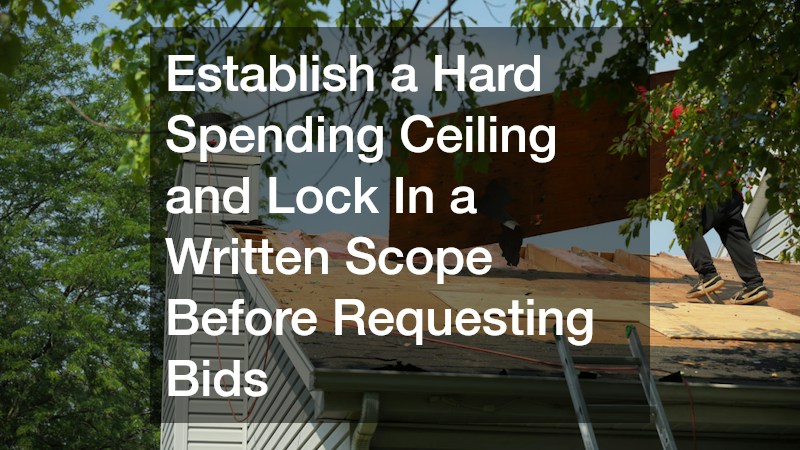
Before browsing design catalogs or inviting contractors onto your property, establish an absolute financial ceiling anchored to your property’s current market value. Financial planners and real estate appraisers routinely advise capping major whole-property renovations between 15% and 30% of your home’s appraised value. Exceeding that threshold risks over-improving for your neighborhood, making it difficult to recover your capital when you eventually sell or refinance. Research recent comparable sales within a half-mile radius to verify your neighborhood’s price ceiling, then divide your wish list into three non-negotiable financial tiers:
- Building Envelope and Core Systems: Allocate funds first to components that keep water out and structural loads secure, including roof framing, siding integrity, foundation drainage, electrical panels, and aging plumbing stacks.
- Cosmetic and Lifestyle Upgrades: Direct remaining funds toward kitchen cabinetry, designer tile, decorative millwork, and outdoor entertaining zones only after core structural needs are fully funded.
- Financing and Carrying Costs: If you plan to fund the project through a home equity line of credit or construction loan rather than cash reserves, deduct loan origination fees, appraisal charges, and projected interest payments from your gross budget on day one so they do not erode your construction capital.
After locking in your spending cap, translate your priorities into a written specification sheet before requesting a single quote. One of the fastest ways to blow a renovation budget is asking tradespeople for estimates based on a vague walkthrough. When two professionals interpret “modernize the exterior and main living level” differently, their numbers will vary wildly—and any detail left out of the original contract will reappear later as an expensive change order. Protect yourself by writing a standardized room-by-room and exterior-zone scope document that specifies exact square footage, demolition and haul-away expectations, insulation R-values, window framing dimensions, and target material grades. Handing the exact same specification sheet to every general contractor and specialized roofing company ensures that every bid reflects identical deliverables, preventing ambiguous allowances from inflating your final bill.
Collect Apples-to-Apples Quotes and Vet Trade Specialists Strategically

Never rely on a single quote—or a lump-sum estimate scribbled on the back of a business card—to anchor a five- or six-figure renovation. Collect at least three written, line-item proposals for every major phase of work, and insist that each bid separate skilled labor hours from raw material allowances. In a typical residential remodel, labor accounts for roughly 40% to 50% of total costs, materials represent another 40% to 50%, and permits, engineering, and disposal absorb the remaining 5% to 10%. Comparing itemized breakdowns makes it easy to spot padded material markups or under-scoped labor hours. When reviewing exterior envelope bids from local roofers alongside proposals from stucco contractors, verify that preparatory steps—such as rot replacement, ice-and-water shield underlayment, flashing upgrades, wire lath reinforcement, and weep screed installation—are explicitly listed rather than assumed.
While saving money is always a top priority, an estimate that comes in 25% to 30% below competing bids is almost always a warning sign rather than a bargain. Suspiciously low quotes frequently stem from omitted permit fees, uninsured subcontractors, thin material grades, or a deliberate strategy to win the job and recoup margin through aggressive mid-build change orders. Ask every bidder for active proof of general liability insurance, workers’ compensation coverage, and recent local references before signing an agreement. Once you select a properly licensed and insured partner, protect your financial leverage by tying payments to verified physical milestones rather than arbitrary calendar dates:
- Initial Deposit (10% to 15%): Covers contract execution and initial material deposits; avoid paying 40% or 50% upfront unless custom-fabricated architectural windows or cabinetry require verified factory deposits.
- Mid-Project Progress Draws (60% to 70% total): Release scheduled payments only after major phases—such as framing, rough-in mechanicals, or exterior cladding—pass municipal building inspections.
- Final Punch-List Holdback (10% to 15%): Retain the final balance until every walkthrough deficiency is corrected, job-site debris is cleared, and signed lien waivers are collected from all primary trades and suppliers.
Sequence Exterior Site Work to Eliminate Rework and Double Labor Costs
Poor project sequencing is one of the most expensive hidden drains on a renovation budget because it forces you to pay twice for the exact same surface. Property owners frequently rush to install fresh driveways, decorative walkways, or manicured beds early in the timeline, only to watch heavy lumber trucks, roll-off dumpsters, and scaffolding crack concrete and churn soil into mud. To eliminate self-inflicted site damage, enforce a strict top-down, heavy-to-light workflow across your entire lot:
- Overhead Clearance and Demolition: Address tall trees, dead limbs, and heavy structural tear-outs first so falling branches and heavy equipment have unobstructed access to the building perimeter.
- Upper Envelope and Cladding: Complete roof replacements, chimney repairs, upper-story siding, and exterior painting before finishing ground-level hardscapes so dropped fasteners, mortar splashes, and ladder feet never mar new surfaces.
- Heavy Groundwork and Paving: Schedule utility trenching, grading, and driveway resurfacing only after heavy delivery vehicles have finished crossing the property.
For example, hiring professional tree services to remove hazardous trunks, prune overhanging canopies, and grind invasive roots before framing crews arrive prevents structural roof damage and clears access lanes; similarly, scheduling fresh asphalt paving at the tail end of heavy construction ensures your new driveway will not be rutted by concrete mixers or dumpster roll-offs.
Alongside logical phase sequencing, timing your exterior work around regional construction demand can unlock substantial savings without sacrificing workmanship. Most homeowners flood contractors with inquiries between late spring and mid-summer, driving up labor rates and stretching lead times. By scheduling outdoor site clearing, grading, and exterior envelope upgrades during late fall or early spring shoulder windows, you can often negotiate 10% to 20% off peak-season pricing while securing more attentive crew scheduling. Additionally, coordinate neighboring exterior trades to share mobilization windows whenever possible so you are not paying separate equipment delivery, staging, and disposal fees across multiple disjointed weeks. Consolidating dumpsters, portable sanitation, and material drops across overlapping trades further trims recurring site overhead.
Source Non-Technical Materials Directly and Leverage Safe DIY Sweat Equity

When contractors purchase, store, transport, and warranty building materials on your behalf, they routinely apply a 15% to 30% procurement and handling markup to cover administrative overhead and delivery risk. While letting licensed professionals supply complex structural systems—such as architectural shingles, engineered trusses, and high-efficiency HVAC units—keeps manufacturer warranties intact, you can trim thousands of dollars from your budget by purchasing straightforward, non-technical bulk items directly from wholesale supply yards. Watch for late-season clearance events and contractor-grade bulk pricing on durable perimeter and yard items:
- Perimeter Hardware and Panels: Ordering bulk fencing supplies—including pressure-treated posts, rails, pickets, gates, and galvanized hinges—directly from a regional lumber or fence distributor eliminates retail middleman markups.
- Groundcover and Hardscape Aggregates: Purchasing bulk landscaping supplies such as triple-shredded mulch, crushed drainage gravel, paver base, edging, and topsoil by the cubic yard rather than individual retail bags cuts material costs by up to half.
Before placing any direct order, confirm exact quantities, delivery drop-zone placement, and lead times with your project lead so materials arrive right when installers need them without cluttering your driveway, blocking access routes, or exposing weather-sensitive items to rain. Always inspect delivered pallets immediately upon arrival so damaged boards or short counts are documented before installation begins.
You can compound those material savings by contributing your own labor—often called sweat equity—on high-hour, low-risk tasks that do not bottleneck professional crews. Labor-intensive prep and finish work carries high hourly billing rates yet requires minimal specialized tooling, making it ideal for organized homeowners:
- Safe High-Savings DIY Tasks: Non-structural interior demolition (removing old carpet, baseboards, and non-load-bearing drywall), daily job-site sweeping and debris sorting, priming and painting interior walls, staining wood fence boards, and planting shrubs or spreading mulch.
- Mandatory Licensed Pro Scope: High-voltage electrical panels, natural gas lines, main water supply repiping, structural beam installations, and roof tie-ins.
Attempting complex mechanical or structural work yourself to save a few hundred dollars frequently leads to failed municipal inspections, voided homeowner insurance coverage, and expensive tear-outs when licensed trades have to undo faulty installations. Keep a realistic log of your available weekend hours so self-assigned prep work finishes ahead of scheduled subcontractor arrival dates without delaying critical-path milestones.
Protect Your Budget with a Tiered Contingency Fund and Post-Build Reserve

Even the most thoroughly planned renovation will uncover surprises once walls are opened or soil is excavated. Treating your contingency reserve as spendable upgrade money—rather than an untouchable insurance policy—is a recipe for mid-project financial stress. Scale your ring-fenced contingency fund to the age and construction style of your property:
- Properties Built Within the Last 25 Years: Set aside a strict 15% contingency reserve to cover minor framing adjustments, material price spikes, or unexpected delivery surcharges.
- Properties Built Before 1980: Increase your reserve to 20% or 25% to absorb higher probabilities of hidden moisture intrusion, deteriorated subflooring, outdated wiring, or unpermitted past alterations.
Keep this contingency money in a separate high-yield savings account rather than your primary checking account so it is never accidentally absorbed by upgraded light fixtures or cabinet hardware. When old exterior siding is stripped away or foundation soil is re-graded, crews frequently uncover spalling brick walls, cracked foundation parging, or failing mortar joints that require specialized masonry services before any new cladding, waterproofing, or patio work can safely move forward. Having dedicated reserve cash ready allows you to authorize necessary structural repairs immediately without halting crew momentum or raiding your kitchen and bath finish budget.
Beyond unexpected structural discoveries, safeguard your bottom line by capturing the soft costs and post-build recovery expenses that routinely catch first-time renovators off guard. Municipal building permits, architectural drawings, and engineering stamps typically add 3% to 8% to total construction costs. Alongside regulatory fees, budget explicitly for multi-week roll-off dumpster rentals, utility usage spikes, and temporary dining or lodging expenses if your kitchen or primary bathroom will be offline for several weeks. Just as importantly, set aside a dedicated line item at the very end of your spreadsheet for local landscaping services to re-grade soil swales away from your foundation, aerate and reseed turf compacted by heavy machinery, and restore your property’s curb appeal once every trade vehicle has pulled away.
Disciplined renovation budgeting is about replacing guesswork with structure before a single contract is signed. By anchoring your total spend to your property’s value, locking in an itemized written scope, comparing transparent bids, sequencing heavy site work logically, and protecting a tiered contingency reserve, you stay firmly in control of both your timeline and your cash flow. Every dollar preserved through smarter procurement and proper trade sequencing stays in your pocket—or funds high-return equity upgrades that elevate how your property looks, functions, and performs for years to come. Before scheduling your first on-site walkthrough, open a master spreadsheet, organize your project into these five budget pillars, and establish your hard spending ceiling today.